High-precision diagnostic apparatuses, intelligent EV chargers, automated flow controllers, and energy monitoring architectures designed for global smart-grid integration.
Microgrid architectures are transitioning rapidly from basic backup standby installations to dynamic, bidirectional power control hubs. The global deployment of Battery Energy Storage Systems (BESS) has seen an exponential compound annual growth rate (CAGR), driven by the imperative to stabilize renewable energy generation (solar PV, wind) and mitigate rising demand charges in Commercial and Industrial (C&I) sectors.
Modern microgrid energy storage relies on sophisticated Power Conversion Systems (PCS) and Energy Management Systems (EMS) that operate on high-speed communications protocols. These systems execute peak shaving, load shifting, and seamless islanding when utility grid connections fail. Furthermore, the integration of EV fleet infrastructure requires dedicated local energy storage buffering to manage high peak load demands without incurring excessive grid upgrades.
An authoritative analysis of technical capabilities, geographical focus, manufacturing capacities, and product ecosystem integration.
Industrial microgrids demand high reliability. Suppliers are evaluated on their ability to offer advanced liquid-cooled BESS containers, high-voltage battery management systems (BMS) with multi-level monitoring, and integrated PCS. Liquid cooling systems have emerged as the industry standard, providing superior thermal uniformity (within ±2°C across cells) compared to older air-cooled variants, extending battery lifespan by up to 20%.
Crossing international borders requires strict alignment with safety certifications. Top manufacturers ensure their entire design envelope conforms to UL9540, UL9540A (thermal runaway propagation testing), IEC 62619, and UN38.3 for battery transport. Additionally, conforming to local grid codes (such as IEEE 1547 in the US and G99 in the UK) is non-negotiable for grid-tied commercial storage applications.
| Supplier Profile Class | Primary Cell Chemistry | Target Applications | Global Compliance Standards | Cooling Tech & Key Advantage |
|---|---|---|---|---|
| Tier 1 Utility-Scale Exporters | LFP (Lithium Iron Phosphate) | Grid-scale, large C&I, ancillary support | UL9540A, IEC 62619, G99, IEEE 1547 | Liquid Cooling; high energy density containers |
| C&I Microgrid Specialists | LFP, LTO (for high-cycle/extreme temp) | Peak shaving, microgrid backup, EV buffering | UL1973, CE, IEC 62477 | Hybrid liquid/air; built-in modular EMS controls |
| Smart Monitoring Integrators | Multi-chemistry compatible (BMS/EMS) | Substation monitoring, distributed IoT power | CE, FCC, RoHS, Industrial IoT protocols | Convection/Active; dynamic thermal balancing software |
| Off-grid and Remote Specialists | LFP, Solid-state (Emerging) | Telecommunication hubs, remote communities | UN38.3, IEC 62133 | Passive ruggedized; highly tolerant to ambient conditions |
The manufacturing ecosystem of microgrid energy storage in China has undergone a structural transformation. Guided by Factory 4.0 standards, leading production hubs integrate digital twin modeling, fully automated cell sorting lines, and AI-driven quality inspection protocols to ensure component uniformity.
This automated integration directly addresses the core issue in large-scale battery systems: cell-to-cell variations. When thousands of cells are connected in series and parallel, the system's performance is limited by the weakest cell. Through precision laser welding, automated internal resistance matching, and automated testing cycles, Chinese exporters maintain extremely tight cell tolerances, maximizing operational lifespan.
Global procurement teams face complex supply chain dynamics. Importing BESS systems requires assurance of component availability and long-term support. China's complete vertical integration—from lithium refining and cathode production to PCS manufacturing and software engineering—guarantees stable production timelines and shields buyers from supply chain shocks seen in fragmented markets.
Additionally, integrated testing facilities simulate real-world grid anomalies, thermal stresses, and high-load cycles before units ship. This rigorous quality control ensures that containerized systems arrive on-site as plug-and-play modules, dramatically reducing commissioning costs and scheduling overruns.
Analyzing how microgrid storage integrates with existing infrastructures to reduce operational costs and enhance energy resilience.
High demand charges levied by utilities can account for up to 50% of a commercial facility's monthly electricity bill. Microgrid storage systems monitor facility demand dynamically, discharging stored energy when consumption spikes, effectively capping peak load fees.
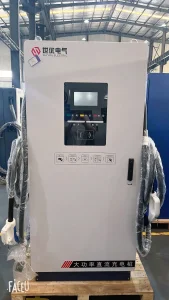
As logistics operators transition to EV fleets, simultaneous high-power charging (e.g., multiple 160kW fast chargers) can destabilize local substations. A localized BESS buffers the grid, charging slowly during off-peak hours and discharging rapidly when fleet trucks connect.
For remote operations, mining sites, or manufacturing facilities in regions with unstable grids, BESS provides seamless islanding capabilities. Within milliseconds of a grid outage, the storage system establishes local voltage and frequency reference points.
At Zhejiang Emy Car Co., Ltd., we are dedicated to bringing you expert insights into the world of electric vehicles. Our team of seasoned automotive professionals works tirelessly to evaluate and rank the best electric cars on the market. With over 75 years of automotive testing experience, we bring you the most accurate, up-to-date, and reliable vehicle reviews.
We understand that purchasing an electric vehicle is a big decision, and we’re here to make that process easier for you. Every year, we put hundreds of cars, SUVs, and trucks through a rigorous series of tests. Our expert testers not only assess raw performance data, but also consider real-world factors such as comfort, technology, safety, and overall value to give you a comprehensive picture of each vehicle.
Our rankings aren’t just based on opinions—they reflect objective test results combined with in-depth hands-on evaluations. From acceleration, range, and handling to design and practicality, we provide thorough insights that truly help you find the electric vehicle that best fits your needs.
Our editorial team works with unmatched precision to ensure that every review is backed by real-world driving experiences, so you can trust that the information you receive is accurate and comprehensive. Whether you’re looking for a compact city car or a family-friendly SUV, we have the expertise to guide you toward the best choices on the market.
At Zhejiang Emy Car Co., Ltd., we are committed to transparency and quality, making sure our rankings reflect the performance and features that matter most to you. Trust us to deliver the best electric car recommendations based on years of expertise and hands-on testing.

 Ranked #1 in Testing Reliability
Technical query resolutions for engineering consultants, developers, and global procurement managers.
High-durability accessories, energy systems, and automotive components designed for rigorous industrial environments.


 Emy Car