A short-range EV can still deliver a rewarding road trip, but it demands more thoughtful preparation than a long-range model. The question is not simply, “How to plan a road trip with a short range EV?” It is about understanding distance, charging access, weather, traffic, and your own comfort with uncertainty. A 120-mile battery may perform differently on a cold, rainy mountain road.
Tom Moloughney, an EV charging analyst and host of State of Charge, offers a useful principle: “Charging is part of the trip, not an interruption.” That idea changes the entire route. Drivers should identify reliable chargers before departure, confirm connector compatibility, and keep a realistic battery reserve. A hotel with overnight charging can matter more than a scenic location. So can a backup station 15 miles away.
Leave room for mistakes.
This guide examines practical ways to plan the journey, from checking live charger status to reducing speed and cabin energy use. It also considers the less attractive details, including queues, broken equipment, detours, and unexpected battery loss. Some plans look perfect on a screen but fail during real travel. That is why experienced EV drivers test charging networks, carry suitable cables, and avoid treating estimated range as a promise. A careful plan should feel flexible, not fragile. Short-range electric driving may require extra patience, yet it can encourage slower routes, better stops, and a closer connection with the places between destinations.
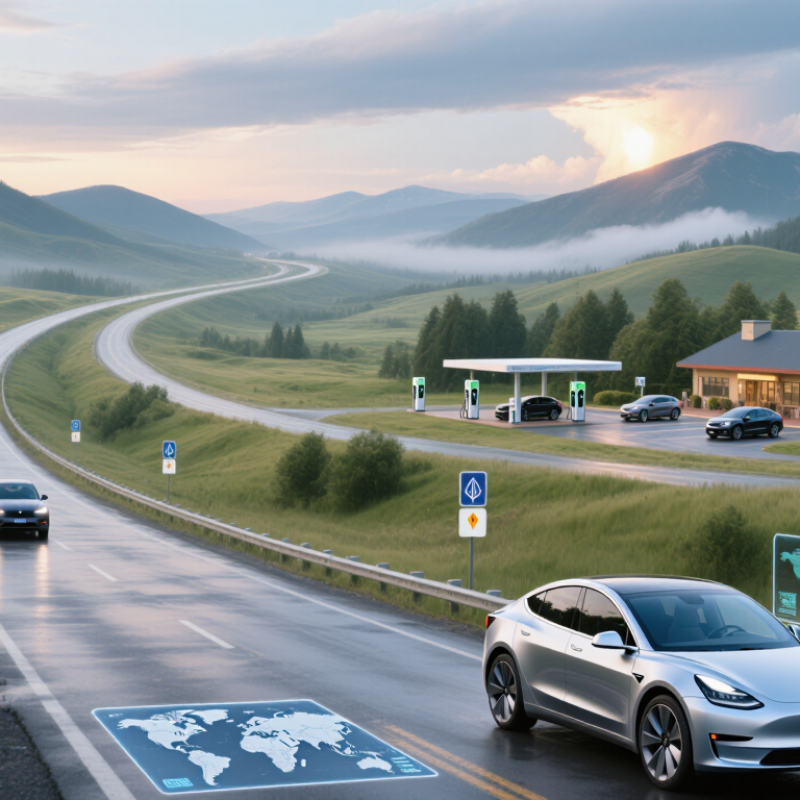
Why Plan a Road Trip with a Short Range EV?
Understanding Short-Range EV Capabilities and Travel Limitations
A short-range electric vehicle can handle more than city errands. Its practical travel distance depends on battery size, driving speed, temperature, and road elevation. A vehicle rated for 150 miles may deliver less on a cold, windy day. Cold air matters. Heating the cabin also consumes energy, especially during repeated stops.
Route planning requires more than checking the distance between two points. Drivers should locate reliable charging stations and confirm their operating hours before departure. A 90-mile trip may feel comfortable with a full battery and one charging option. It becomes stressful when the only charger is occupied, damaged, or several miles away. Keeping a 20% battery reserve provides useful protection, although this reduces the available travel range.
My experience with short-range EV travel has shown that slower roads can improve efficiency. Gentle acceleration, moderate speeds, and reduced heating may preserve energy. Still, this approach can inconvenience passengers and lengthen the journey. Plans can fail. A route may include unexpected hills, traffic, or a charger that operates more slowly than advertised. Checking recent charger information and carrying a backup route is sensible. Drivers should also compare the vehicle’s usable battery capacity with its displayed estimate, because dashboard predictions change with recent driving conditions. A short-range EV can support memorable road trips, but only when travel limits are treated as real planning factors rather than minor inconveniences.
Why Plan a Road Trip with a Short Range EV?
Planning Routes Around Charging Stations and Energy Needs
A short range EV can make route planning more deliberate and surprisingly rewarding. Instead of driving until the battery warning appears, I map each charging stop before leaving home. I check station availability, charging speed, opening hours, and nearby alternatives. A route may look simple on a map. It can become difficult after steep hills, cold weather, strong wind, or heavy traffic.
I usually keep a 20 percent energy buffer before reaching a charger. This margin protects the trip when real conditions differ from estimates. It also reduces stress near unfamiliar roads. I record the distance between stations and compare it with the vehicle’s expected consumption. Then I add extra energy for heating, air conditioning, luggage, and elevation changes. Small details matter.
A charging stop should fit the journey, not interrupt it. I choose locations near food, restrooms, walking paths, or grocery stores. Before departure, I save a backup station in case the first one is busy or unavailable. Some plans still fail. I once treated a dashboard estimate as exact, which was careless. Weather changed, and the next stop felt uncomfortably far away. Now I check updated conditions and leave earlier when possible. A slower route with reliable charging can be better than a faster route with no practical backup.
A short-range EV can make road planning more deliberate. My first route plan looked adequate. It was not. The International Energy Agency reported that public charging access is expanding, but availability still varies widely by region. Therefore, I check charger spacing, elevation, and reliable rest stops before leaving. I also keep a practical reserve, usually 15 to 20 percent. That margin is not excessive when a charger is occupied.
Weather changes the calculation quickly. An AAA study found that cold conditions near 20°F could reduce EV range by about 41% with cabin heating. Hot conditions near 95°F reduced range by about 17% with air conditioning. Wind, rain, and snow can add resistance too. I reduce speed during storms and avoid treating the dashboard estimate as a promise. It is only an estimate.
Traffic creates another hidden cost. Repeated acceleration, congestion, and detours consume time and energy. The U.S. Department of Energy reports that aggressive driving can reduce conventional vehicle efficiency by 15% to 30% on highways and 10% to 40% in stop-and-go traffic. EVs recover some energy through regenerative braking, but not all losses disappear. Heavy luggage also matters. A fully loaded cabin, roof equipment, and steep roads can shrink the buffer. I once packed for every possibility and planned too confidently. A lighter load, slower pace, and one extra charging option would have been wiser.
Why Plan a Road Trip with a Short Range EV?
A short-range electric vehicle rewards careful preparation. The International Energy Agency’s Global EV Outlook 2024 reports that public charging points exceeded four million worldwide in 2023. Yet availability varies sharply between cities, rural roads, and mountain areas. I check the route before leaving, marking reliable charging stops near supermarkets or cafés. A ten-minute detour can prevent an expensive, stressful recovery.
Charging strategy controls the budget. The U.S. Department of Energy’s Alternative Fuels Data Center notes that charging costs depend on electricity rates, charging speed, and location. Home charging is usually easier to price than public fast charging. I charge overnight when possible, then leave with enough energy for traffic, weather, and a missed turn. Keep a margin. Driving at moderate speeds also reduces energy use, especially against strong wind.
Small plans matter. I once trusted the dashboard range too much. Cold weather reduced it faster than expected, and the final charging stop was already busy. That mistake changed my routine. I now compare two charging options, check opening hours, and carry a backup cable. The U.S. National Renewable Energy Laboratory also highlights how charging demand and travel patterns affect infrastructure planning. Range anxiety is partly technical, but poor preparation creates much of it.
| Planning Dimension | Reference Data or Assumption | Prepared Road-Trip Approach | Estimated Result |
|---|---|---|---|
| Vehicle and Route Profile | |||
| One-way trip distance | 600 miles | Plan charging locations before departure and identify a backup option for each charging stop. | Fewer unplanned detours and less time spent searching for an available charger. |
| Usable battery capacity | 60 kWh | Use the usable capacity rather than the advertised gross battery capacity when estimating stops. | More realistic range and charging calculations. |
| Expected efficiency | 3.5 miles per kWh under moderate conditions | Use a conservative planning efficiency of 3.0 miles per kWh in cold weather, strong wind, heavy rain, or at sustained highway speeds. | Estimated energy requirement: approximately 171 kWh at 3.5 miles/kWh, or 200 kWh at 3.0 miles/kWh. |
| Estimated full-charge range | Approximately 210 miles at 3.5 miles per kWh | Plan each leg around 150–175 miles instead of using the entire theoretical range. | A practical reserve of approximately 35–60 miles remains available for traffic, weather, and charger delays. |
| Charging Strategy and Cost | |||
| Starting charge | 90% state of charge, equal to approximately 54 kWh | Charge at home before departure when possible, especially before the first long leg. | Reduces dependence on higher-priced public charging during the opening section of the trip. |
| Arrival target at a charging stop | 15% state of charge, equal to approximately 9 kWh | Use a planned operating window of 15%–80% for most stops. | Provides a safety buffer while avoiding unnecessary charging above 80%, where charging speed commonly decreases. |
| Energy added per normal stop | Approximately 39 kWh when charging from 15% to 80% | Combine charging with meals, restroom breaks, or short rest periods. | Approximately 3–4 charging stops for a 600-mile trip, depending on weather, speed, traffic, and starting charge. |
| Home electricity cost assumption | $0.15 per kWh | Complete as much charging as possible at home before and after the trip. | About $25.70 for 171.4 kWh of trip energy, excluding charging losses. |
| Public AC charging cost assumption | $0.30 per kWh | Use slower public charging during longer stops when practical. | About $51.40 for 171.4 kWh, before any applicable parking or session fees. |
| DC fast-charging cost assumption | $0.45 per kWh | Use DC fast charging mainly for time-sensitive sections and stop only long enough to reach the next reliable charger. | About $77.10 for 171.4 kWh, before any applicable time, parking, or connection fees. |
| Potential charging-cost difference | Home charging versus DC fast charging | Replace avoidable fast-charging sessions with home or lower-cost AC charging. | Potential energy-cost reduction of approximately $51.40 per 600-mile trip under the stated assumptions. |
| Preparation Measures That Reduce Cost and Risk | |||
| Route elevation and weather review | Energy use can rise when driving uphill, into strong wind, in cold temperatures, or with heavy climate-control use. | Add a 10%–20% planning margin when conditions are unfavorable. | Reduces the chance of arriving at a charger with an unnecessarily low battery level. |
| Driving speed | Higher highway speeds generally increase aerodynamic energy consumption. | Use a steady speed and avoid frequent acceleration and braking. | Improves miles per kWh and can reduce the number of charging minutes required. |
| Vehicle load | Passengers, luggage, roof equipment, and cargo carriers increase energy demand. | Remove unnecessary items and avoid external cargo equipment unless needed. | Lower rolling and aerodynamic resistance, especially during highway travel. |
| Charging-stop timing | Charging above approximately 80% is often slower on DC fast chargers. | Use shorter stops between reliable chargers instead of routinely charging to 100%. | Better use of time while maintaining a practical reserve. |
| Backup planning | A charger may be occupied, unavailable, or operating below its rated power. | Keep one alternate charger and enough battery reserve to reach it. | Lower risk of emergency detours, towing, or costly last-minute charging decisions. |
| Illustrative 600-Mile Cost Comparison | |||
| Mostly home charging | 171.4 kWh × $0.15/kWh | Charge fully at home whenever the route and battery capacity allow it. | Approximately $25.70 |
| Mostly public AC charging | 171.4 kWh × $0.30/kWh | Use public AC charging during planned longer stops. | Approximately $51.40 |
| Mostly DC fast charging | 171.4 kWh × $0.45/kWh | Use fast charging for convenience or time-sensitive travel. | Approximately $77.10 |
| Mixed charging plan | 60% home charging at $0.15/kWh and 40% DC fast charging at $0.45/kWh | Start with a high home charge, use fast charging only for necessary highway stops, and recharge at home after returning. | Approximately $46.30 |
A short-range EV can still make a rewarding road trip, but delays require honest planning. On one trip, heavy rain reduced my expected range faster than the dashboard predicted. I also missed a charging stop after construction changed the route. That mistake cost nearly an hour. It taught me to treat range estimates as guidance, not promises.
Charging problems can appear without warning. A busy station may have a long queue, a damaged connector, or limited power.
Before leaving, check several charging options along the route. Keep at least 20 percent battery capacity for traffic, hills, cold weather, and wrong turns. If a detour appears, slow down and recalculate before committing. A short coffee stop can become useful charging time.
Save two backup charging locations near each major stop. Carry water and a light snack during delays. Charge before reaching a low battery level. Ask local staff about working equipment when online information seems outdated. Keep navigation updated, but question it when roads look unfamiliar. I still sometimes plan too tightly. Leaving more time would be wiser, especially on unfamiliar roads.
Yes, but distance ratings are not guarantees. Cold wind, hills, traffic, and cabin heating reduce usable range. Keep a reserve.
A 20% reserve offers useful protection. It covers unexpected hills, detours, traffic, or a busy charger. This reserve reduces total driving distance.
Check availability, charging speed, operating hours, and nearby alternatives. A station may be occupied, damaged, or slower than expected. Save one backup location.
Cold temperatures can reduce battery performance. Cabin heating also uses energy during repeated stops. Strong wind may increase consumption on open roads.
Yes, moderate speeds usually improve efficiency. Gentle acceleration helps conserve energy. Slow roads may work better, but passengers may dislike the longer journey.
Choose stations near cafés, food shops, restrooms, or walking paths. A useful stop can feel less disruptive. A ten-minute detour may prevent major stress.
No, it changes with recent driving conditions. I once treated it as exact, which was careless. Weather changed, and the next charger felt uncomfortably far away.
Home charging is often easier to price than public fast charging. Charge overnight when possible. Compare two charging options before departure.
Record station distances and compare them with expected energy use. Add energy for luggage, heating, air conditioning, and elevation. Plans fail sometimes. Leave earlier when conditions look uncertain.
Planning a road trip in a short-range electric vehicle requires careful preparation, but it can be practical, affordable, and enjoyable. How to plan a road trip with a short range EV? Start by understanding the vehicle’s realistic driving range rather than relying only on ideal estimates. Map a route with reliable charging stations, identify backup options, and allow extra energy for hills, cold or hot weather, traffic, passengers, and luggage. Breaking the journey into manageable sections can reduce stress and make charging stops more predictable.
To control costs and avoid unnecessary delays, charge efficiently before departure, prepare the vehicle, and check station availability in advance when possible. Keep flexible time in the schedule for queues, slower charging, equipment problems, or unexpected detours. Carry essential travel supplies, monitor energy use throughout the trip, and adjust speed or climate settings when necessary. With realistic planning and a backup strategy, a short-range EV can complete longer journeys safely and comfortably.

Emy Car